Grant, O Lord, that in all our sufferings here upon earth, for the testimony of thy truth, we may stedfastly look up to heaven, and by faith behold the glory that shall be revealed; and, being filled with the Holy Ghost, may learn to love and bless our persecutors by the example of thy first Martyr Saint Stephen, who prayed for his murderers to thee, O blessed Jesus, who standest at the right hand of God to succour all those that suffer for thee, our only Mediator and Advocate. Amen.
Most British people know December 26th as ‘Boxing Day’, a day for sleeping off the excesses of the Christmas dinner, blearily watching classic Christmas films or, if one is particularly energetic, going for a walk or trying to snap up a deal at the shops. Lovers of Cricket probably turn their thoughts to the southern hemisphere, where the traditional boxing day test usually starts just as you are heading to bed on Christmas day.
The calendar marks the second day of Christmas with something that at first glance seems a bit off message. December 26th is the feast of St Stephen (you know, when Good King Wenceslas looked out) and is a day to think about his martyrdom. Martyrdom? At Christmas? How does that work?
Well, there are a number of potential answers to that question. My favourite one is that it demonstrates the intimate union between Christ and his people. Through the mystery of the incarnation and the work of the Spirit we have truly become one – just as he has shared in our human life, so we share in his suffering and death. So Stephen’s death, so carefully modelled on Christ’s own (seriously, compare Luke’s accounts of the two) is an appropriate counterpart to Christ’s birth.1
Stephen’s death, understood in the light of the Scripture readings prescribed for the day, underlines the new era of grace which has dawned with the coming of Jesus. Along with material directly drawn from Stephen’s life and death in Acts, the lectionary also points us to Matthew 23:34-end, Gen 4:1-10 and 2 Chron 24:15-22. This selection clearly takes its cue from Jesus’ saying that all the blood of the martyrs, from Abel (in Gen 4) to Zechariah (in 2 Chron 24) will be visited on his contemporaries.
If you read all those accounts together, a significant contrast between Stephen’s death and those of Abel and Zechariah jumps out at you. In Genesis, Abel’s blood cries out to God for justice, for vengeance, while in 2 Chronicles Zechariah’s dying words are “May the Lord see and avenge!” As Jesus highlights in Matthew’s Gospel, along with a thousand unfulfilled promises and hopes, the Hebrew Bible is bracketed, just after the beginning and just before the end, by people murdered for their faithfulness to God, by blood which calls out to heaven for vengeance.2
Jesus answers that call for justice. As we spent all Advent remembering, he will return to judge the world. Though the martyrs still call out for justice, their appeal will not go unanswered forever (Rev 6:10-11). This is good news for Abel, for Zechariah, for everyone who has loved God more than life itself. There is nothing unworthy about the desire that God should bring justice for those who are killed for their faith. Indeed, the knowledge that God does indeed see and avenge is a powerful motive to obey the Bible’s command that we never avenge ourselves (Rom 12:19).
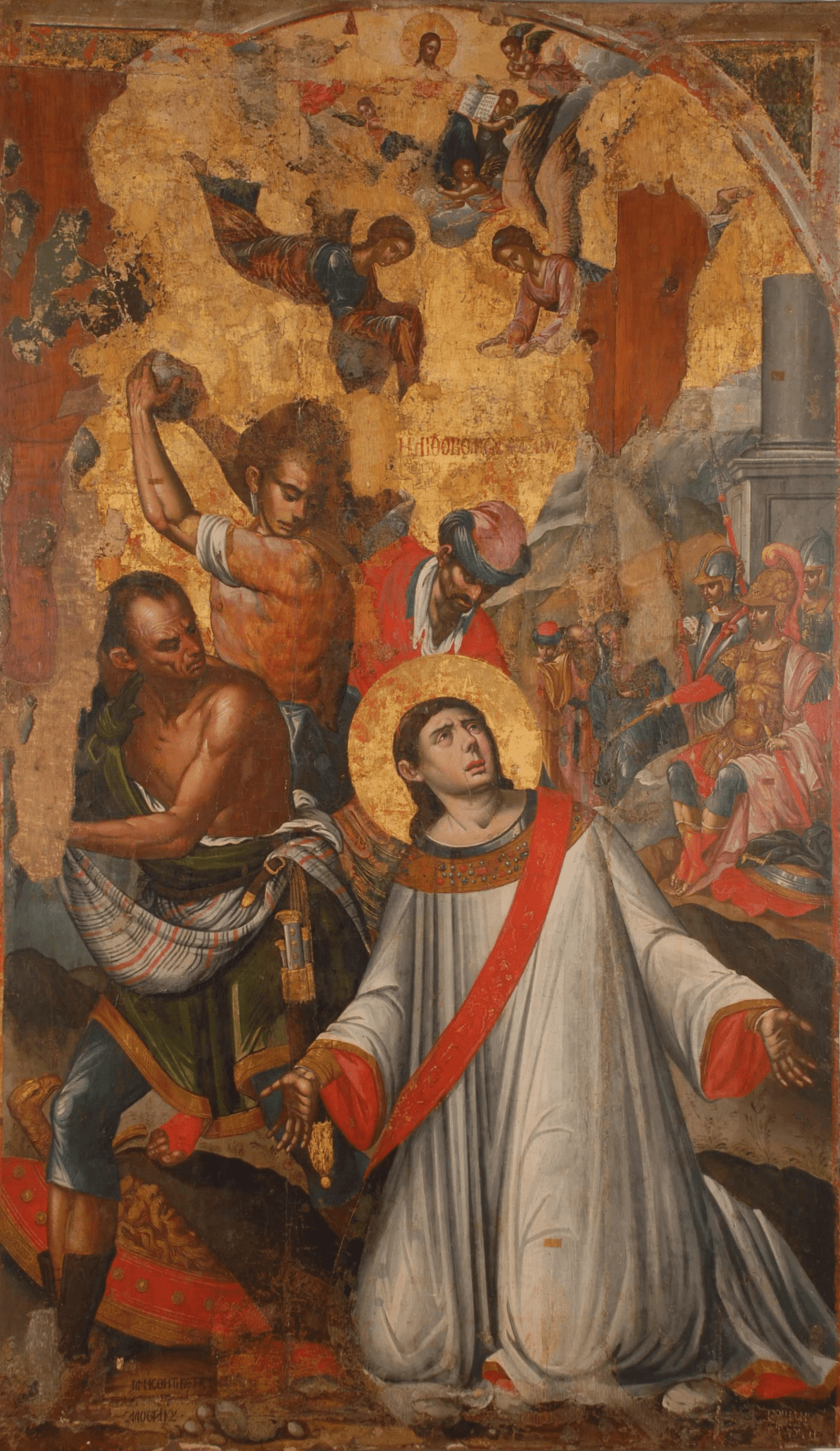
But it’s impossible not to notice one major point of contrast between Stephen’s death and those of Abel and Zechariah. For all the injustice, and violence of his bloody death, Stephen’s last words are not a cry for vengeance, but an appeal for mercy; “Lord, do not hold this sin against them.” Stephen’s death is, as I said, closely modelled on that of Jesus, who prayed for those who put him to death (Luke 23:34).
Jesus, whose blood speaks a better word than that of Abel, has changed what it means to die for God. Before his coming, martyrdom was a matter of faithfulness to the end, grounded in a confidence that the just judge of all would see and avenge. Now, it is still all of those things, but above all it is a participation in God’s work of reconciling the world to himself. Not that we are able to add anything to the saving power of Jesus’ death, the one, unique, complete sacrifice for sins. But as the martyrs pray for their persecutors, even in death, God’s answer to their prayers brings life and forgiveness even out of death. Stephen’s dying wishes are sandwiched between references to one of his murderers, a young man who would go on to become the quintessential example of a sinner saved by grace, Saul of Tarsus (Acts 7:58, 8:1).
All this lies years in the future for the infant we contemplate at Christmas. But his birth, ‘the Dawn of redeeming grace’ as the carol calls it, heralds a sea change in the relationship between God and man, a new era of forgiveness and reconciliation, even for those most violently opposed to God.
It would be remiss of me to conclude without asking you to pray for the roughly one in seven Christians who live under the threat of some level of harassment or persecution for their faith this Christmas. If there were no other link than that, it would be a salutary exercise for us in the West to remember them while we enjoy to pleasures of the season. If you live in the UK, why not invite your MP to this event organised by Open Doors to highlight the plight of Christians suffering persecution? And pray also for those who persecute the church, that the grace of Christ might reach them this Christmas.
The image for this post is Michael Damaskinos’ The Stoning of St Stephen (1591) and is in the public domain.
- My friend Niv does this excellently on his blog, here. ↩︎
- For another example of martyrdom in the intertestamental Jewish tradition see the moving account of the seven sons murdered for their faith in 2 Maccabees 7. Central to these martyrs’ deaths is their hope in the resurrection, bolstered by their confidence that in the future God will punish their tormentors. ↩︎

 Christ and Calendar