This post is the third in a series on saints’ days. You can read the introductory post here and the second post, on whether ‘saints’ are a Biblical idea here.
In the next few posts, I’m going to look at what some of the major Protestant confessions of faith say about the whole question of whether and how to honour the saints. Since it was a major source of disagreement at the time, the issue came up a lot. As we look at what the Reformers themselves said about the saints, hopefully we’ll be able to see how the Church of England’s decision to keep saints’ days in its calendar is built on solidly Protestant convictions.
Before we dive in, there’s one thing I want to say up front. I have no idea who reads this and it’s possible that I get the odd Roman Catholic reader. If that’s you, I love that you’re here – almost all the feasts we cover in Christ and Calendar are about precious things we hold in common and I hope you find yourself built up in your faith by what I write. Nevertheless, the heart of my goal for this blog is to present a Protestant understanding of the Calendar and to convince Protestants that its riches are something we too can and should treasure. To that end, I’m speaking in these posts as a Protestant to Protestants. I will basically take the Protestant critique of traditional Catholic devotion to the saints for granted – I don’t have time or space to argue it in detail. The confessional documents I’m going to quote are sometimes quite strongly worded – just as sixteenth-century Papal Bulls and conciliar canons are sometimes strongly worded! Please be assured that I mean no personal disrespect to you in these posts. I hope you find them an interesting window on another tradition and that you continue to find Christ and Calendar a source of uplifting content.
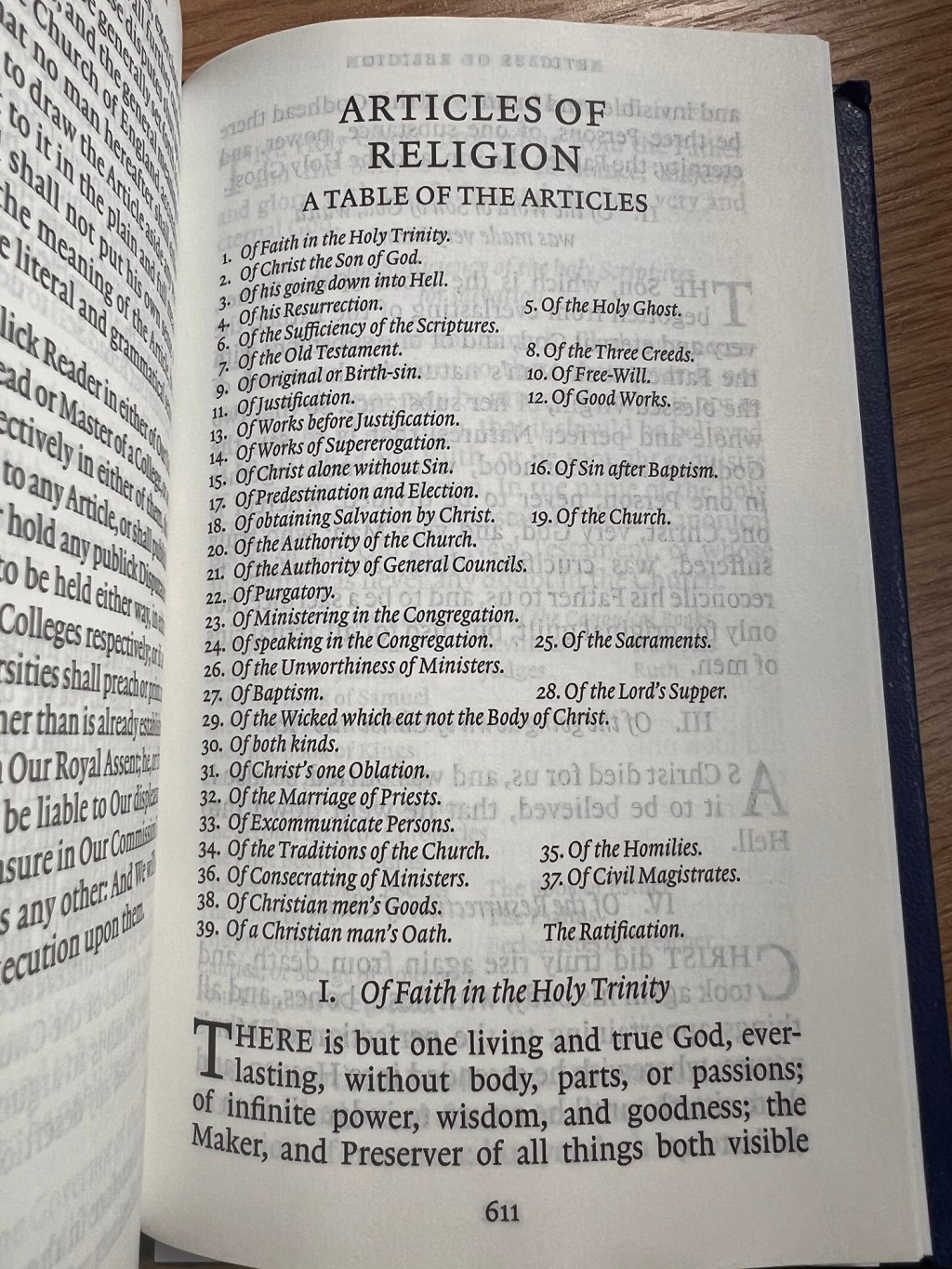
As an Anglican, obviously, I’m going to start with the Church of England’s formularies. The 39 Articles don’t really say anything directly about saints’ days, but they do address devotion to the saints more broadly. Article XXII says
The Romish Doctrine concerning Purgatory, Pardons, Worshipping, and Adoration, as well of Images as of Reliques, and also invocation of Saints, is a fond thing vainly invented, and grounded upon no warranty of Scripture, but rather repugnant to the Word of God.
Clearly, this article is shaped by Reformation concerns with some important planks of Roman Catholic piety. Prominent among those concerns is a firm rejection of several practices which form the core of the cult of the saints1 as the Reformers encountered it. In order to reform and renew our remembrance of the saints on a more Biblical footing, the Reformers found it necessary to prune away the following aspects of Catholic piety.
We don’t venerate relics.
Despite lots of great work on this in the last 30 years or so, I suspect quite a lot of Protestants today still have an overly low view of the human body. Like the Klingons in Star Trek, many view it as a shell which we cast off at death.2 The resurrection ensures that bodies are so much more than that. Millions of years after every human civilisation we know today has crumbled to dust, the mortal remains of Christian believers, resurrected, transformed, and made immortal, will live forever in the New Creation. Even before the resurrection had been revealed, Joseph was eager for his bones to be brought to the promised land rather than left in Egypt and is commended in Scripture for having done so. We should certainly treat the bodies of the faithful departed with every respect. But the honour Protestants give the saints and indeed the reverence with which we treat their remains does not go as far as offering veneration to their bodies – much less their clothing and possessions.
We don’t venerate icons.
Of course, artistic depictions of the saints are unobjectionable. If a picture of a saint from the past helps you to remember and be inspired by their example, that’s great. There isn’t even necessarily a problem if it’s in the style of an icon. Beyond their aesthetic value, most icons are composed according to a developed system of symbolism that can helpfully convey important truths about the people and scenes being depicted. Edifying art is fine – though we should be careful to avoid offering a cause of stumbling to others. But just as Protestants do not venerate the saints directly, by means of their mortal remains, so also they reject doing so indirectly, by means of their images.
We don’t ask the saints to intercede for us
Lastly, the article is clear that we do not invoke the saints. As we’ll see, this is a very consistent thread in Protestant confessional documents. Many Protestants are happy to concede that there are some hints in Scripture that the faithful departed do pray for us and for the advancement of God’s kingdom. Personally, I think it’s very unlikely that they are either indifferent to or ignorant of the cause of Christ’s Kingdom on earth. But Protestants have always thought that the invocation of saints encroaches on the way Christ alone acts as our mediator with God and, besides this, there are no Scriptural examples of prayer being offered to any creature in Scripture.
So those are some things that we don’t do as we remember and honour the saints. Even if that’s made for quite a negative post, I hope it acts as a reassurance to Reformed readers that I’m certainly not proposing a wholesale embrace of Medieval piety – far from it. But having clarified what saints days don’t entail, the formularies say little about the role they do play in Protestant thought. To get more of that, we’re going to have to look elsewhere, starting with the original Protestant doctrinal statement, the Augsburg Confession.
- In Catholic theology the term ‘cult of the saints’ is a technical way of referring to the various ways Catholics venerate the saints and is not considered derogatory. ↩︎
- My knowledge of Star Trek is based almost exclusively on a three week period of my life when my brother’s girlfriend was a massive trekkie. If this isn’t quite right, please don’t give me the seminar on Klingon religious views! ↩︎

 Christ and Calendar