This post is part of a series exploring the place of saints’ days in Protestant spirituality. For the series introduction, see here. For a look at whether ‘saints’ are a Biblical category, see here. For the 39 Articles on what we don’t do to honour the saints, see here. For the Lutheran Confessions on honouring the saints, see here.
Our last look at how Protestants might honour the saints comes from another major Reformation confession of faith. But whereas the previous post looked at confessions which are Lutheran in outlook, this one comes from the ‘Reformed’ branch of the Reformation.
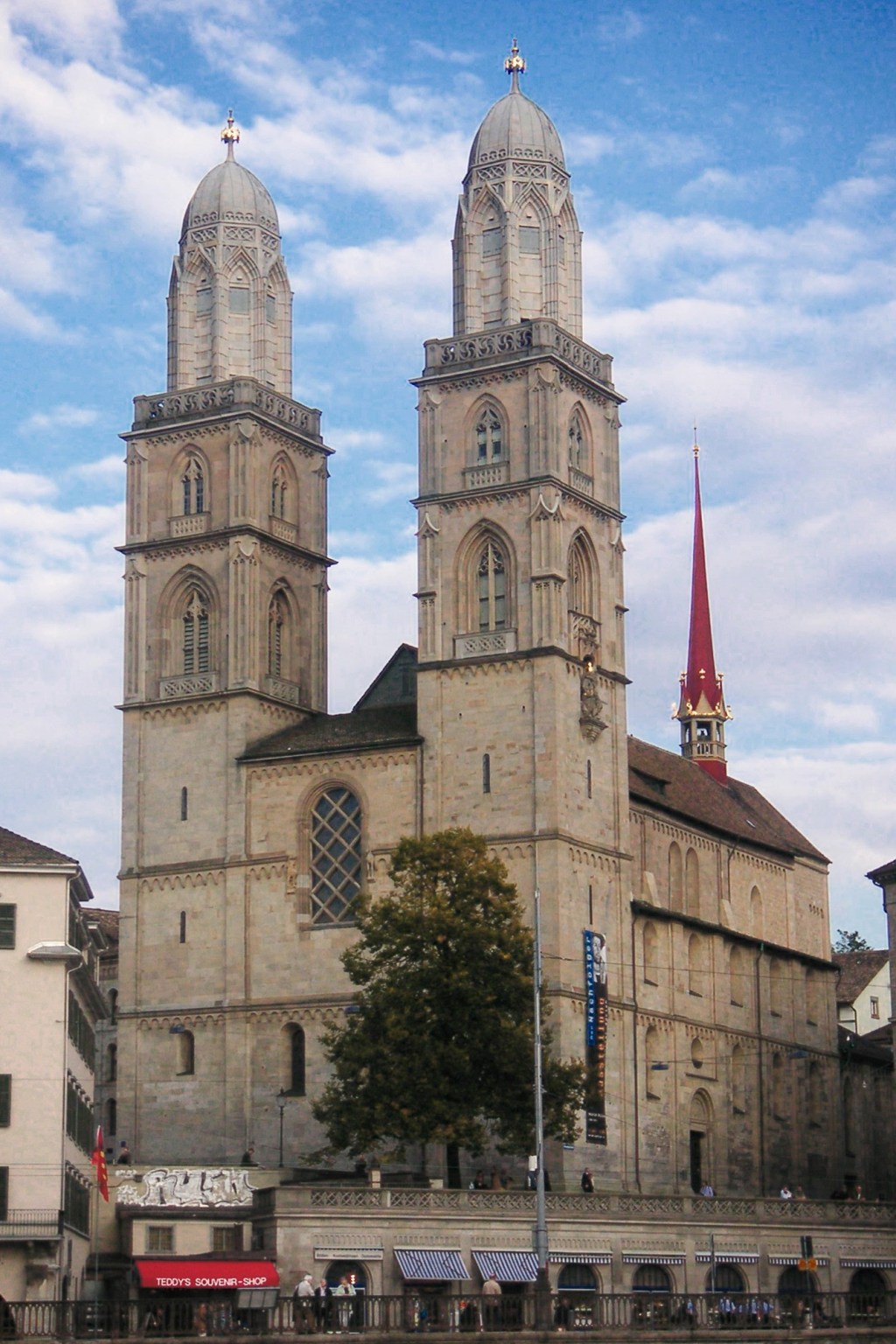
The Second Helvetic Confession was written by Heinrich Bullinger, the man who took over the leadership of the church in Zurich and became the dominant confession of the Swiss Reformed churches.1 In 1566, thirty six years after the Lutheran princes presented the Augsburg Confession to the Imperial Diet, a Reformed prince, Frederick III of the Palatinate, presented this confession to the Diet, which was once more held in Augsburg.2
The Confession strikes a number of chords which we will be familiar with by now. In Chapter IV, the Confession decries the veneration of icons of the saints. Chapter V rejects both the veneration of relics and the invocation of the saints. But amongst all this, it’s clear that Bullinger does not want you to get the wrong idea. So alongside the negative, he also includes a paragraph on the ‘due honour’ Reformed Christians should pay the saints.
THE DUE HONOUR TO BE RENDERED TO THE SAINTS. At the same time we do not despise the saints or think basely of them. For we acknowledge them to be living members of Christ and friends of God who have gloriously overcome the flesh and the world. Hence we love them as brothers, and also honour them; yet not with any kind of worship but by an honourable opinion of them and just praises of them. We also imitate them. For with ardent longings and supplications we earnestly desire to be imitators of their faith and virtues, to share eternal salvation with them, to dwell eternally with them in the presence of God, and to rejoice with them in Christ. And in this respect we approve of the opinion of St. Augustine in De Vera Religione: “Let not our religion be the cult of men who have died. For if they have lived holy lives, they are not to be thought of as seeking such honours; on the contrary, they want us to worship him by whose illumination they rejoice that we are fellow-servants of his merits. They are therefore to be honoured by the way of imitation, but not to be adored in a religious manner,” etc.
We don’t get quite the same emphasis on grace that I love in the Defence of the Augsburg Confession. What Bullinger seems keen to emphasise is our attitude to the saints themselves. You could read the Reformed confessions and come to the conclusion that Reformed Christians are indifferent to the saints. Quite possibly you could look at many Evangelical churches and come away with the same impression. But Bullinger says that is a misunderstanding of the Reformed faith. We do not think ‘base thoughts’ of the saints.
So if Melanchthon’s writing is marked by its emphasis on grace, Bullinger stands out for the warmth of his expression. If we reject traditional Catholic devotional practices, it seems that Bullinger is keen that we are not outdone in our affection for the saints themselves. We ‘love them as brothers’, we hold ‘an honourable opinion’ and express ‘just praises’ of them. They elicit ‘ardent longings’ and ‘earnest desire’. We want to imitate them, be saved along with them, live forever with them, rejoice in Christ with them. Our longings for these things issue forth in ‘supplications’, so while Reformed Christians don’t pray to the saints, it seems we do pray about them quite a bit. Far from being peripheral, Bullinger wants the saints to be prominent in our prayers, our lives, our hopes, our joys and our loves.
But I have to be honest and say that for all this, Bullinger did not approve of saints’ days. In Chapter XXIV, the Confession says:
THE FESTIVALS OF CHRIST AND THE SAINTS. Moreover, if in Christian liberty the churches religiously celebrate the memory of the Lord’s nativity, circumcision, passion, resurrection, and of his ascension into heaven, and the sending of the Holy Spirit upon his disciples, we approve of it highly. but we do not approve of feasts instituted for men and for saints. Holy days have to do with the first Table of the Law and belong to God alone. Finally, holy days which have been instituted for the saints and which we have abolished, have much that is absurd and useless, and are not to be tolerated. In the meantime, we confess that the remembrance of saints, at a suitable time and place, is to be profitably commended to the people in sermons, and the holy examples of the saints set forth to be imitated by all
Bullinger raises two objections to saints’ days, one principled and the other practical. On the one hand, he appears to be concerned that saints’ days impinge on the worship of God. His argument is, in effect, that you cannot have a festival devoted to anyone other than God. On the other, the saints days have much which is ‘absurd and useless’. I assume that he has in mind the kind of traditional pageantry which accompanied saints’ days in before the Reformation.
What can we say about this? First up, it’s not altogether clear to me how far Bullinger has Church of England (or for that matter Lutheran) practice in mind. His first objection lands far more easily if what he has in mind is the kind of saint’s day which the church is Zurich had abolished – the pre-Reformation saints’ days in which the saint themselves is praised and venerated, where their icon or relics may be brought out for veneration and where their intercession is sought. It’s not nearly so compelling an objection to the Protestant saints days which had consciously been shorn of these things. A similar thing can be said about the second objection, though I’ll look at it in more detail in the next post.
To the extent that you try to apply the first objection to the sort of saints’ days kept by Lutherans and in the Church of England, I think you fall into the mistake I commended Melanchthon for avoiding – pitting God against creatures. It doesn’t help that the note of thanksgiving that was so prominent in the Defence of the Augsburg Confession is notably absent in the Second Helvetic Confession. But if you add that layer in, it becomes relatively easy to see how a day which commemorates a saint can nonetheless be devoted to the exclusive worship of God.
Secondly, it’s worth pointing out that Bullinger doesn’t appear to appeal to the regulative principle here. In fact, he ‘highly approved’ of churches observing the dominical feasts in the church calendar. This isn’t the sort of objection you find in the later Westminster Directory for Public Worship.
Thirdly, there is a really significant concession at the end. At a ‘suitable’ time and place, the memory of the saints can be kept alive, you can preach about it in sermons in church and people can be encouraged to follow their examples (and don’t forget those supplications mentioned in Chapter V). The confession gives no indication of when that ‘suitable time’ might be and the cynic in me suspects that it’s a recipe for not getting around to it. But what Bullinger commends is, if anything, more than you will find required in the Prayer Book festivals.
What I think we’re seeing here, then, is a situation where the Swiss Reformed have made a mostly prudential judgement that it is simpler to abolish the saints’ days than reform them. But at the same time, they enunciate the kind of principles by which, if they wished, saints days could be reformed. The Church of England has adopted the same principles, but made a different prudential judgement to produce a Reformed saints’ day. For what it’s worth, I think most of the differences between the BCP and the worship of the Reformed churches on the continent can be explained that way.3
That’s the end of my historical case for how saints’ days can form a part of Reformed worship. I don’t know whether I’ve convinced you or not and if I haven’t, that’s fine. Nothing here is intended to argue that saints’ days are obligatory for Reformed churches, only that they are allowable. But I do hope for at least two outcomes.
I hope I’ve shown you that the Protestant Reformers gave a large place to honouring the saints in their spirituality. Far from being a hangover from the medieval church, this was a carefully thought through devotion based on genuinely Protestant principles. Problematic aspects of medieval piety were pruned away and the traditional emphasis on the saints’ examples was reoriented around the Gospel of grace. The intended outcome was an approach to the saints which was warm, affectionate and wholehearted.
I also hope that whether or not you found the case for saints’ days themselves compelling, I’ve convinced you that adopting that attitude to the saints could be beneficial to you. The Church of England and the Lutheran Churches put that attitude into practice through their reformation of saints’ days. The Reformed Churches in Switzerland didn’t. There’s more than one way to skin a cat. If you don’t like the Anglican way, I hope I’ve at least encouraged you to find a way that works for you.
Next we’re going to be looking at some of the practicalities of a Reformation approach to the saints – firstly, as they appear in the Church of England’s liturgy and secondly, with some more general tips for what we’ve found helpful.
- You can read the whole confession here ↩︎
- Quite aside from its influence among 16th Century Reformed Churches, which was extensive, it’s an appropriate confession to look at for Anglicans because of the close partnership between the English reformers and the church in Zurich. If you have access to an academic library, Torrance Kirby documents Bullinger’s interest in and influence over the English church in The Zurich Connection and Tudor Political Theology (Brill, 2007). ↩︎
- For another example which formed a central part of my undergraduate dissertation at college, the letters written by Martin Bucer and Peter Martyr Vermingli during the vestarian controversy defend the principle that vestments and symbolic gestures are allowable and even potentially beneficial in Reformed worship while expressing a strong prudential judgement that they should be abolished. But a different judgement call in a matter of wisdom is a disagreement on a totally different level to a difference in principle. ↩︎

 Christ and Calendar